The Bookseller’s Ghost

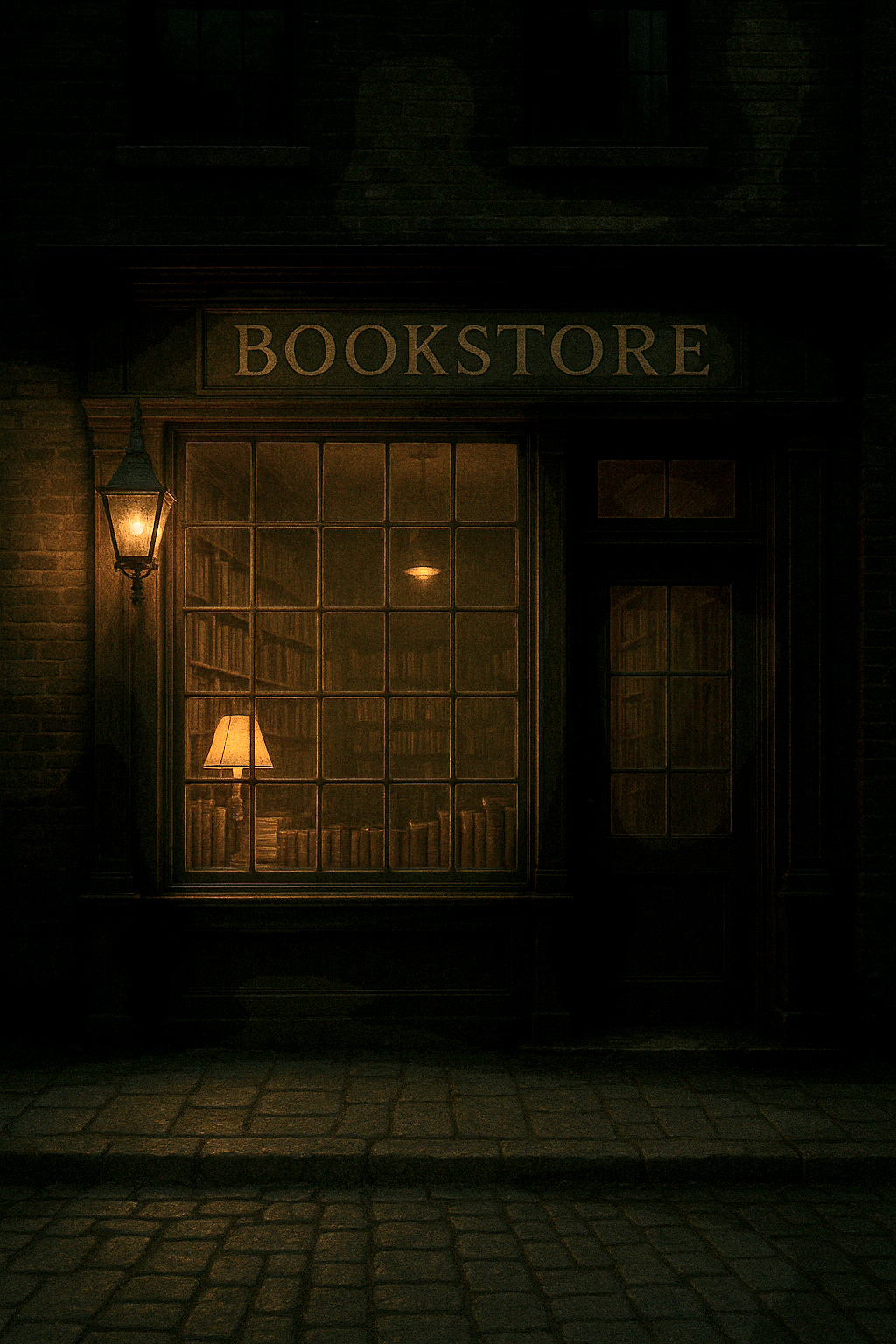
The bell above the door let out a hollow jingle as Eliza stepped inside, the sound swallowed by dust and the scent of old paper.
The shop was darker than she remembered. Narrow aisles wound between tall oak shelves that leaned like tired sentinels. Sunlight slanted through the front window in fractured beams, catching motes that drifted lazily in the air.
“Hello?” she called, her voice echoing softly.
Silence.
It had been two weeks since she’d received the letter the one written on yellowed stationery and signed by an attorney she’d never met. Her great-uncle Samuel had passed away, leaving her his bookstore.
The Wren & Quill, Established 1892.
She’d laughed when she read it. She hadn’t seen him since she was nine, back when he’d given her a first edition of The Secret Garden and told her every good bookshop was haunted.
Now, standing in the doorway, she wondered if he’d meant that as a joke.
The floor creaked as she stepped farther inside. Books towered on every surface stacked in teetering piles, spilling from crates, resting open on counters like sleeping animals. She brushed her hand along a nearby shelf. The wood was cool to the touch.
Behind the front desk sat a brass cash register, a fountain pen resting beside it. A note lay pinned beneath the pen, written in neat, looping script:
Welcome home, Eliza.
She frowned.
The attorney had said the place was locked up after the funeral. No one else should have been here.
She called out again. “Is someone here?”
The air shifted just slightly and the faint scent of pipe smoke drifted past her.
The first few days were spent sorting through the clutter.
There was no electricity beyond the front room, and no phone line at all. But the gas lamps still worked when she turned the knobs carefully, filling the shop with a soft amber glow.
She began cataloguing the books by hand, just as Uncle Samuel’s ledgers instructed. His handwriting filled dozens of journals customer lists, orders, notes about the weather, even sketches of strange symbols she couldn’t decipher.
At night, she slept in the small flat above the store, where the floorboards sighed and the wind whispered through the cracks in the windowpanes.
She woke once to the faint sound of someone walking below slow, deliberate steps across the creaking wood.
“Hello?” she called.
The sound stopped.
She waited, heart pounding. The silence stretched long enough for her to doubt herself.
Then came the sound of a single book sliding from a shelf and hitting the floor.
She stayed awake until dawn, listening.
By the fourth night, the pattern had begun.
Every time she closed the shop and turned out the lamps, the books moved.
She’d come downstairs in the morning to find stacks rearranged, aisles cleared, and strange new titles sitting neatly on the counter. None were in her catalog. Some had spines so faded she could barely make out the words; others gleamed like they’d been printed yesterday.
The first one she dared to open was titled Borrowed Time.
Its pages were blank except for a single handwritten line:
You’ve come to keep the shop alive.
She slammed it shut.
That afternoon, a customer wandered in a man in a wool coat and scarf despite the warmth outside.
“Didn’t know this place was open again,” he said, smiling faintly.
“It’s new for me too,” Eliza replied, forcing a smile. “My uncle left it to me.”
“Ah,” he said. “Samuel Wren. Fine man. Quiet. Knew his books.”
She nodded. “Did you know him well?”
“Well enough to know he never really left,” the man said. His tone was casual, but his eyes lingered too long on the shelves. “Sometimes you can still smell his pipe, if you stay after closing.”
Eliza froze. “That’s an odd thing to say.”
He chuckled softly. “Just folklore, Miss. This shop’s got its share of stories.”
She rang up his purchase, a weathered copy of Collected Ghost Stories.
When he left, the faint scent of pipe tobacco hung in the air again.
That night, she stayed late to reorganize the back room.
Rain tapped against the windows, soft but steady. The shop glowed like a lantern in the dark street.
As she moved a stack of books, something caught her eye a door she hadn’t noticed before, half-hidden behind a tall shelf. The knob was brass, worn smooth by years of use.
She turned it gently.
The door creaked open onto a narrow staircase descending into darkness.
A cool draft rose from below, carrying that same unmistakable scent of tobacco and something else ink and dust and something sweetly rotten.
She hesitated, then fetched a lantern.
The steps groaned beneath her as she descended. The walls were lined with shelves, but these books were different older, their bindings cracked and blackened.
At the bottom, she found a small room.
A writing desk stood in the center, and above it, a framed photograph: a man in a dark vest, smiling faintly as he held a pipe between two fingers.
Uncle Samuel.
The desk held another book, lying open. The ink was fresh.
Don’t be afraid, Eliza.
She stumbled backward. The lantern flickered violently.
A shape moved in the corner of her eye a faint shimmer of light, like heat rising from a road. When she turned, it solidified into the outline of a man.
He stood beside the desk, translucent but unmistakable.
“Uncle…” she whispered.
His face was calm, the same faint smile from the photograph. “You shouldn’t have come down here yet.”
Her throat tightened. “You’re”
“Dead? Yes.” He looked around fondly. “Though you’d be surprised how little that changes the work.”
The lantern light wavered, passing through him.
“Why are you still here?” she asked.
He sighed softly, his voice like the turning of pages. “Someone has to keep the stories in order. This shop isn’t just a store it’s a threshold. Every book here remembers the person who loved it most. They all come back, eventually. Even me.”
She took a step closer. “You mean the books are… alive?”
“In a sense. Memory gives them weight.” He glanced at her, eyes dimming. “And when no one remembers, they fade. That’s why I needed you.”
“I don’t understand.”
“You will,” he said gently. “But for now keep the lamps lit. Don’t let the stories go cold.”
Then he was gone.
The room dimmed until only the lantern flame remained.
For weeks after that, the shop seemed to breathe.
Customers came who claimed they’d been here before, even though the store had been closed for years. They’d find a book they’d “lost decades ago,” or one that told them exactly what they needed to hear.
Eliza grew used to the faint voice in the back of her mind Samuel’s calm guidance, nudging her hand toward the right shelf, the right title.
At night, she’d sit by the fire upstairs and listen to the faint murmur of pages turning on their own.
But with each passing day, the air in the shop grew colder. The lamps flickered no matter how much oil she used.
And the books began whispering names she didn’t recognize.
One morning, she found a new note on the counter.
The shelves are hungry.
That evening, as she swept the floor, she noticed a book lying face down near the door. Its title was A Debt Repaid.
When she picked it up, the cover felt warm. The pages trembled under her fingers.
The first line read: You stayed too long.
The air turned icy.
Books began to slide from the shelves one by one, hitting the floor in slow rhythm.
Then the front door slammed shut, locking on its own.
“Eliza.”
She froze. Samuel’s voice close, too close.
She turned, and there he was, standing behind the counter. But this time his eyes were wrong dark, hollow, endless.
“You’ve kept the lamps burning,” he said softly. “You’ve done well.”
“What’s happening?” she whispered.
“The shop needs an anchor. I was tired. It’s your turn now.”
The books rustled around them, pages flapping like wings.
“You tricked me,” she said, voice breaking.
He smiled sadly. “No one owns The Wren & Quill. We just tend it until it takes us.”
The floorboards split open beneath her. A blinding light poured upward, full of voices whispering in a thousand tongues.
Samuel reached out a hand. “Don’t fight it. You’ll understand.”
She stumbled back, shaking her head. “No”
But the light wrapped around her like smoke, and the world folded inward.
When she woke, everything was quiet.
The shop looked the same, but the dust was gone. The lamps burned steady and bright.
Her reflection in the glass was faint, pale. The front door stood open, the bell glinting in the light.
A young man stepped in, blinking against the dimness.
“Hello?” he called. “Is this place open?”
She smiled automatically. “Always.”
He wandered the shelves. “Smells like old paper and what is that? Pipe smoke?”
“Just the shop,” she said softly. “It remembers things.”
He grinned. “Well, I’m glad someone finally reopened it. My grandfather used to come here when he was a kid. Said the owner was a strange one.”
“Strange?” she echoed.
“Yeah. Samuel Wren, I think. Disappeared one night. Never found a body.”
She paused, hand brushing the brass register. “Stories like that have a way of staying.”
When he brought a book to the counter, she rang it up on the old register. The drawer chimed open with a familiar sound that made something deep inside her ache.
“Enjoy your read,” she said, handing it to him.
As he turned to leave, she added, “And if you ever lose it, don’t worry. The shop always finds its books again.”
He smiled, waving as he left.
The door closed.
The scent of pipe smoke filled the air.
Eliza exhaled, long and slow. The shelves creaked, settling around her like old friends.
“Rest now, Uncle,” she whispered. “I’ve got it from here.”
The lamps flickered once, then steadied.
Outside, the sign above the window swayed gently in the wind.
The Wren & Quill — Since 1892.
Inside, the ghostly hum of turning pages filled the air, and from somewhere deep within the stacks came the faint sound of a man’s voice, warm and content:
“Welcome home.”
Another great story. You chose a good topic for us book lovers.